
Air conditioner problems can be stressful, especially when your AC stops cooling during hot weather. Before calling an HVAC technician, many homeowners want to know one simple thing: how much does AC repair cost in 2026?
The answer depends on the type of problem, the parts needed, labor rates in your area, the age of your system, and whether the repair is urgent. In many cases, minor AC repairs cost much less than major repairs involving compressors, coils, refrigerant leaks, or electrical components.
This guide explains average AC repair costs, common repair price ranges, what affects the final price, and when it may be better to repair or replace your air conditioner.
Average AC Repair Cost in 2026
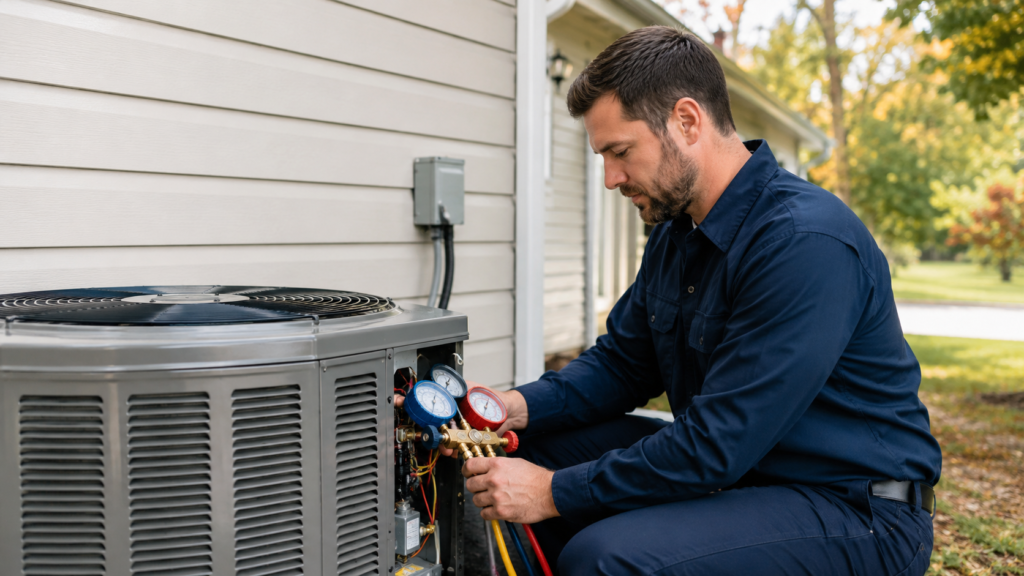
In 2026, AC repair costs can vary widely depending on the issue. Many basic repairs may cost a few hundred dollars, while major repairs can cost much more.
As a general guide, homeowners may pay anywhere from around $150 to $900 for many common AC repairs. More serious HVAC repairs can cost significantly more, especially if the compressor, refrigerant system, coil, or major electrical components are involved.
According to Angi, HVAC repair costs average about $350, but can range from around $100 to $3,000 depending on the unit type, repair type, and labor costs. HomeGuide reports that HVAC repairs commonly range from $150 to $450 on average, with many homeowners spending around $319 for AC service.
These numbers are only general estimates. Your actual cost can be higher or lower depending on your location, the contractor, the parts required, and how difficult the repair is.
Common AC Repair Costs
Below are common AC repair issues homeowners may face and what can affect their repair cost.
1. AC Not Cooling
If your AC is running but not cooling the house, the problem may be simple or serious. Common causes include:
- Dirty air filter
- Thermostat problem
- Frozen evaporator coil
- Low refrigerant
- Refrigerant leak
- Dirty condenser coil
- Failing compressor
- Electrical issue
A simple fix like replacing a dirty filter may be inexpensive. But if the problem involves refrigerant leaks, coils, or the compressor, the repair cost can rise quickly.
If your AC is not cooling and the issue continues after checking the thermostat and air filter, it is usually best to call a licensed HVAC technician.
2. AC Capacitor Replacement Cost
The capacitor helps start and run your AC motor. When it fails, your AC may hum, struggle to start, or stop working completely.
Capacitor replacement is usually one of the more common AC repairs. It is often less expensive than compressor or coil repairs, but the final price depends on labor, part quality, and service fees.
Signs of a bad AC capacitor may include:
- AC not turning on
- Humming sound from the outdoor unit
- Fan not spinning
- AC shutting off randomly
- Burning smell near the unit
Because capacitors are electrical components, homeowners should not try to replace them without proper training.
3. Refrigerant Leak Repair Cost
Low refrigerant usually means the system has a leak. Adding refrigerant without fixing the leak may only be a temporary solution.
Refrigerant leak repairs can become expensive because the technician may need to:
- Find the leak
- Repair or seal the leak
- Test the system
- Recharge refrigerant
- Check system pressure
Refrigerant-related repairs should always be handled by a licensed HVAC professional. Refrigerant handling requires proper tools, safety procedures, and legal compliance.
4. AC Compressor Repair or Replacement Cost
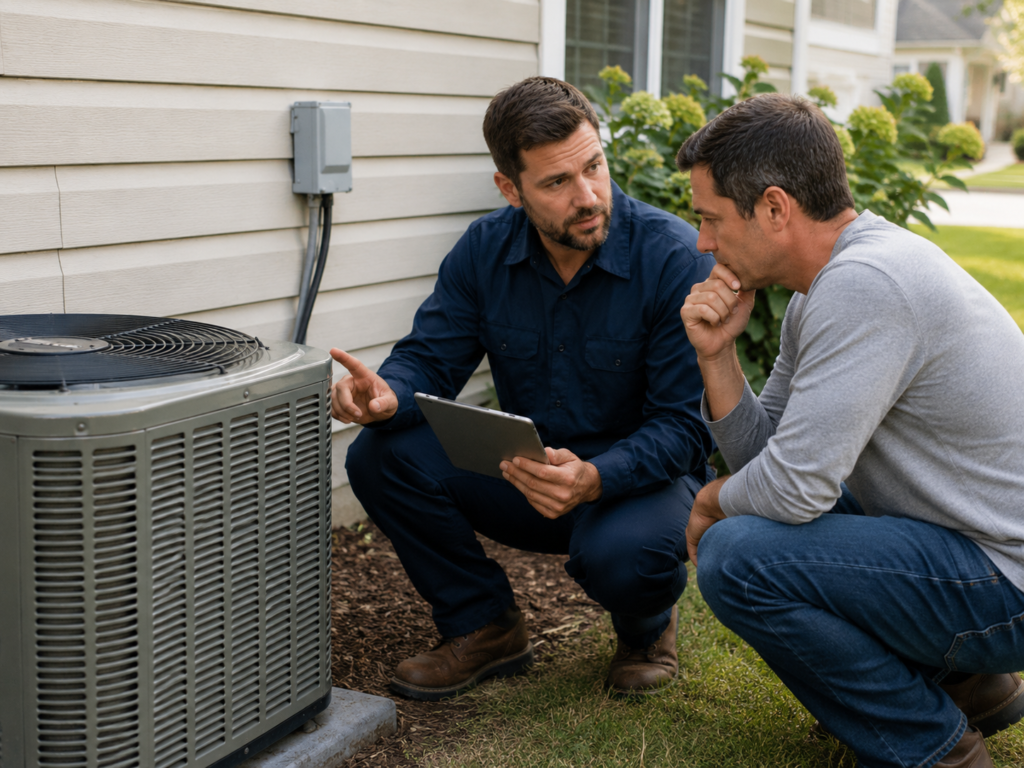
The compressor is one of the most important and expensive parts of an air conditioning system. If the compressor fails, the AC may stop cooling completely.
Compressor repairs or replacements are often among the most expensive AC repair jobs. This Old House estimates AC compressor replacement commonly costs between $800 and $2,300, with an average around $1,550.
If your AC is older and the compressor repair is expensive, it may be smart to compare repair cost vs. replacement cost before making a decision.
5. Frozen Evaporator Coil
A frozen coil can stop your AC from cooling properly. Common causes include restricted airflow, dirty filters, low refrigerant, dirty coils, or blower motor issues.
If you see ice on the AC lines or notice weak airflow, turn the system off and let it thaw before calling a technician. Running the system while frozen can create more damage.
Possible repair costs depend on what caused the coil to freeze. A dirty filter may be simple. A refrigerant leak or blower issue may cost more.
6. AC Drain Line Clog
Air conditioners remove humidity from indoor air. That moisture usually drains through a condensate drain line. If the drain line clogs, water may leak around the indoor unit.
Signs of a clogged AC drain line include:
- Water near the indoor unit
- Musty smell
- AC shutting off
- Wet ceiling or wall near the system
- Full drain pan
A drain line cleaning is often less expensive than major mechanical repairs, but water damage can become costly if the issue is ignored.
What Affects AC Repair Cost?
AC repair prices are not the same for every home. Several factors can change the final cost.
Type of Repair
A small part replacement usually costs less than a major repair involving refrigerant, coils, compressor, or electrical components.
Age of the AC System
Older systems may cost more to repair because parts can be harder to find. If your system is more than 10 to 15 years old, expensive repairs may not always be worth it.
Labor Rates in Your Area
HVAC labor rates vary by city and state. Homeowners in high-cost areas may pay more for the same repair than homeowners in lower-cost areas.
Emergency Service
Emergency AC repair usually costs more than a normal appointment. If you need service at night, during weekends, or during extreme heat, the price may be higher.
System Type
Central AC systems, heat pumps, ductless mini-splits, and packaged units may have different repair costs. Larger or more complex systems can cost more to diagnose and repair.
Warranty Coverage
If your AC is still under warranty, some parts may be covered. However, labor charges, service fees, or diagnostic fees may still apply.
Should You Repair or Replace Your AC?
Repairing your AC may make sense if:
- The system is still relatively new
- The repair is minor
- The unit has been reliable
- The system is still under warranty
- The repair cost is low compared to replacement
Replacing your AC may make more sense if:
- The system is old
- Repairs are becoming frequent
- The repair is very expensive
- Energy bills are rising
- The system no longer cools evenly
- The compressor has failed
- The unit uses outdated refrigerant
A simple rule many homeowners use is this: if the repair is expensive and the system is already near the end of its life, compare replacement quotes before paying for the repair.
How to Lower AC Repair Costs
You cannot prevent every AC problem, but regular maintenance can reduce the risk of expensive repairs.
ENERGY STAR recommends checking your air filter every month during heavy-use months and changing it if it is dirty. At minimum, filters should be changed every three months. Dirty filters restrict airflow, make the system work harder, and can lead to expensive maintenance or early system failure.
Homeowners can also:
- Keep the outdoor unit clear of leaves and debris
- Make sure vents are open and unblocked
- Check thermostat settings
- Schedule seasonal AC maintenance
- Listen for unusual noises
- Call a technician early before small issues become major repairs
When to Call an HVAC Technician
You should call a licensed HVAC technician if:
- Your AC is blowing warm air
- The system keeps freezing
- The AC leaks water
- The outdoor unit will not start
- You smell burning
- The breaker keeps tripping
- You hear loud grinding, buzzing, or banging
- Your energy bills suddenly increase
- The AC runs constantly but does not cool
Some simple checks are safe for homeowners, such as changing the filter or checking thermostat settings. But electrical repairs, refrigerant work, compressor issues, and internal system repairs should be handled by a professional.
AC Repair Cost FAQs
How much does AC repair usually cost?
AC repair cost depends on the problem, parts, labor, location, and service urgency. Many common repairs may fall in the $150 to $900 range, but major repairs can cost more.
Why is AC repair so expensive?
AC repair can be expensive because HVAC systems use specialized parts, electrical components, refrigerant, diagnostic tools, and skilled labor. Emergency service and hard-to-find parts can also increase the price.
Is it worth repairing an old AC unit?
It depends on the age of the unit and the repair cost. If the AC is old and the repair is expensive, replacement may be a better long-term option.
What is the most expensive AC repair?
Compressor replacement is often one of the most expensive AC repairs. Major coil repairs and refrigerant leak repairs can also be costly.
Can I repair my AC myself?
Homeowners can safely do simple tasks like changing filters, clearing debris around the outdoor unit, and checking thermostat settings. Repairs involving refrigerant, electricity, compressors, motors, or internal parts should be done by a licensed HVAC technician.
Final Thoughts
AC repair costs in 2026 depend on the type of problem, your system, your location, and the contractor you choose. Minor repairs may cost a few hundred dollars, while major repairs can cost much more.
Before approving a repair, ask for a clear estimate, understand what parts are being replaced, and compare repair cost with replacement cost if your system is older.
If you are not sure where to start, use our AC cost calculator or compare common AC repair cost guides before calling a technician.